
Guilford County Arrest Log Sources
Start with the GCSO Recent Arrests Catalog. That page is the county's live official listing of people arrested. Older routes on the former P2C host, including a daily bulletin and an arrest view, no longer load. The catalog itself sometimes rejects a request. The sheriff's accessible pages list no separate 72-hour, seven-day, or weekly log. Depth and correction schedules stay unspecified.
That absence shapes the whole search. Build a multi-day view from dated city releases, current custody, court records, and, if needed, a targeted records request. A posted date can differ from the event date, the arrest date, and the booking date. Each marks a different step. A Friday incident may bring a Saturday intake and a Monday agency release. Guilford County rarely moves on one tidy timeline.
Read Guilford Arrest Entries by Date
Work backward by booking date. Keep the source and retrieval date beside each entry. That habit stops a news publication date from standing in for the day of arrest, and it keeps a current jail result apart from an old media report.
- Open the current Recent Arrests Catalog from the GCSO hub and record any date range the live page displays.
- Compare each name with the county Inmate Catalog to learn whether the person remains in Guilford custody.
- Check the arresting agency's official newsroom for a dated release and incident context, not a complete booking list.
- Use the North Carolina Courts Portal or Guilford clerk for the case number, hearings, and disposition.
- Request a defined date range through Guilford County NextRequest when the online record no longer appears.
The Guilford County 24 Hour Arrests page zeroes in on a just-booked person and intake delay. The log task is broader. It tracks entries that rolled off the live roster. Treat the two windows as different.
Guilford Arrest-Log Field Meanings
Three records belong in separate mental folders. One is the police arrest event, another is the jail booking entry, and the third is the court case. A useful log keeps all three apart. The catalog does not spell out its screen labels, so the table sticks to fields the local sources support, without claiming every row shows them all.
| Entry field | Meaning and limit |
|---|---|
| Name | Use the agency's spelling and a second identifier. A shared name is not proof of identity. |
| Booking date or time | Shows processing into jail, which can differ from incident and arrest times. |
| Arresting agency | Identifies GCSO, GPD, HPPD, BPD, Highway Patrol, or another agency that may hold the report. |
| Booking or inmate number | Identifies the jail entry, not the court case or state corrections file. |
| Charges | Lists charges entered at booking. Charges may be amended or dismissed. |
| Bond, hold, or facility | Reflects custody conditions at a point in time and can change. |
| Photograph | The county-linked jail search may show one, but public display is record-dependent and not assured. |
A disposition is the court's recorded resolution: a dismissal, a plea, a judgment, or an acquittal. It lives in the court file. The booking log does not carry it. Someone can drop off the roster while the case stays open, and a copied listing can linger after both have changed.
Guilford Weekend Arrest Log Gaps
Detention intake in Guilford County happens on weekends and holidays too. The county's accessible sources never say whether those bookings are skipped, batched at a set hour, or posted the next business day. Corrections and agency releases can surface later. A Monday search may blend several operational timelines. Nothing in the local data backs a claimed weekend surge. Trust the booking date, not page position.
Compare the current roster next. Call Greensboro Detention Center at 336-641-2700 or High Point Detention Center at 336-641-7900 when a listing confuses you. Inmates transfer between the two county jails. Location can change mid-window.
Note: A delayed public entry does not mean a delayed arrest or booking; only the originating agency can explain a record's timing.
Guilford Police Arrest Newsrooms
City police pages add color. None amounts to a full Guilford County blotter. The Greensboro Police newsroom posts selected dated releases. The High Point Police page carries selected arrest and investigation news, and its related resources link daily arrests or citations plus the county jail search. The Burlington Police media archive holds chosen releases too, not every booking.
The Burlington boundary needs care: only part of the city sits in Guilford County. BPD releases often send arrestees to Alamance County Detention Center instead. So a Burlington story is not automatically a Guilford jail entry. Name the arresting agency and the stated destination first.
The archive shows how one agency publishes selected arrest information rather than all bookings. It is selective by design. View the Burlington archive directly.
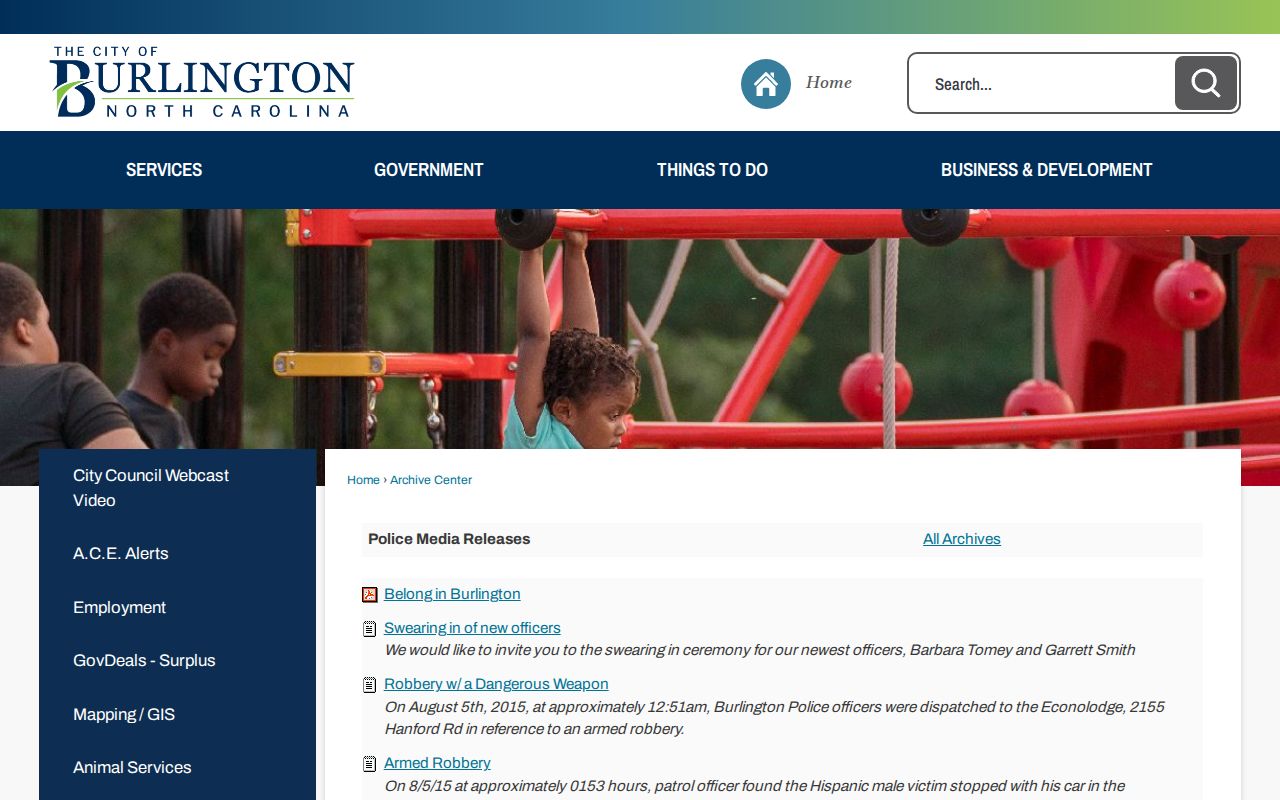
This image shows Burlington's official archive page, not a complete booking list for Guilford County.
Guilford Arrest News and Blotters
Local news can preserve a dated story after a jail entry changes. WXII, WFMY News 2, FOX8, the High Point Enterprise, Rhino Times, Alamance News, and News & Record all publish selected public-safety coverage. Coverage is selective. Cadence follows newsroom judgment. A story may carry agency images, scene photos, or nothing at all. It is never a full custody roster. The WXII local-news section offers one Triad-wide starting point for Guilford County arrests.
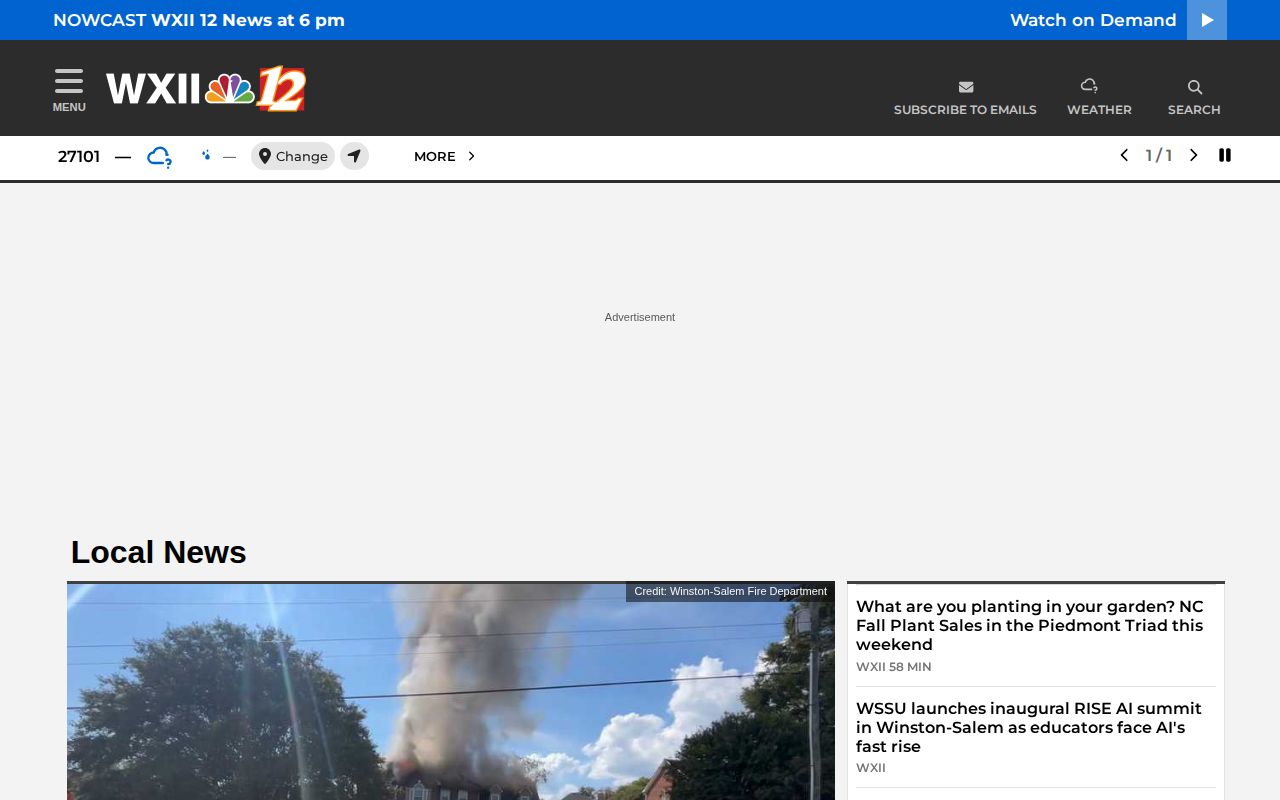
News is selective by nature. Custody checks belong with GCSO. Case outcomes belong with the court. The High Point Enterprise NewsBank archive reaches back to 2007 and turns up recurring "Police Report" results.
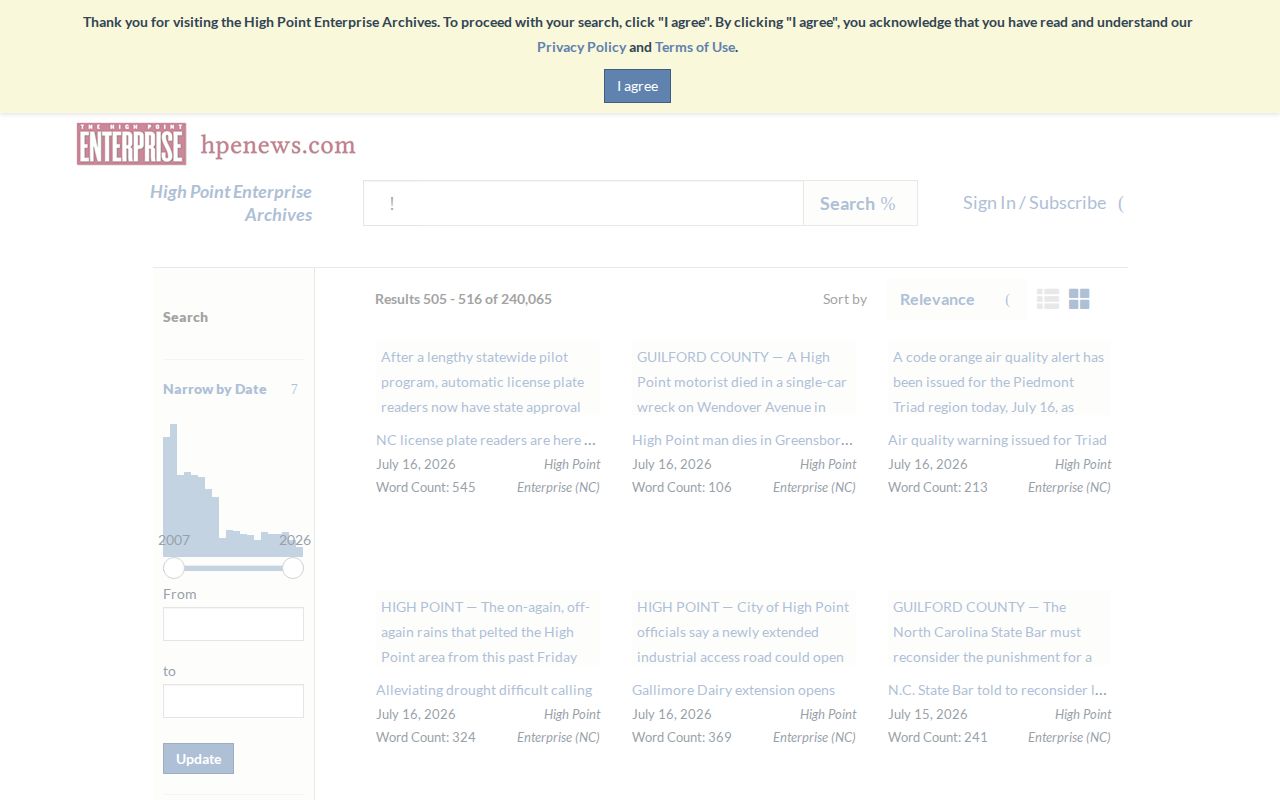
Archive access can require a library card or a paid subscription. Newspaper snippets are not live booking records, either. Several unofficial pages copy Guilford County booking details and keep them online long after the fact. RecentlyBooked, Mugshots.com, Arrests.org, Mugshots.zone, and possibly Busted Newspaper all fit that pattern, and their entries can be stale, incomplete, or tied to the wrong stage of a case. Official records come first. Treat those services as leads only.
Older Guilford Arrest Records
The public roster lives in the present. The county's open pages publish no universal online archive. North Carolina's local-government schedules treat detention records, like rosters and release reports, differently from incident and case files, so an online gap does not mean GCSO destroyed the record.
For an older booking, file through Guilford County NextRequest. Give the full name, an estimated booking date, the arresting agency, and the likely detention center. Ask for the booking record itself. List any photograph as a separate item. If the custodian says the record no longer exists, ask which retention authority applies. Court files sit with the clerk, since courts and jails keep separate retention systems.
The official GCSO 2020 review documents historical enforcement work, but an annual report is not a current arrest log. State Archives and library newspaper collections add historical context. Neither works as a searchable Guilford mugshot archive. No third-party copy can override a corrected or expunged official record.
When the county responds, compare what arrives against what you asked for. Silence does not mean no arrest occurred. Multiagency material may need more review. A city police report can stay with the city while the booking record belongs to GCSO. Keep the response date. Note any explanation of withheld or missing items. For an active case, follow it through the clerk's file.
A countywide source map for the roster, booking records, courts, and records requests sits on the Guilford County recent-arrests hub. Use it to tie an old entry to its current official record.
Keep an archival request narrow. Ask for bookings from a stated date range. Never request every record for an open-ended span. If Greensboro, High Point, or Burlington Police handled the event, get the incident report from that city and the booking record from the detention custodian. This split keeps one agency's silence from being the whole answer. Always record the result date. A log entry is a snapshot, and later court action can change how a case ends.
Public Record Search
Sponsored Results