
Finding Guilford County Recent Arrests
The Guilford County Sheriff's Office anchors the county booking search. Its Police to Citizen portal splits in two. The Recent Arrests Catalog covers people the sheriff has newly processed. The current-custody list answers a different question. It shows who is in jail now. Start with the catalog when the arrest is fresh. Turn to the roster when you need today's housing answer. Each entry lists a name, a booking date, and the charges logged at booking. Guilford County recent arrests surface here first. The catalog's date range shifts, so no fixed posting interval applies.
| Question | Same-day route | Multi-day route |
|---|---|---|
| Primary source | Current Recent Arrests Catalog | Current catalog; old bulletin links are unverified |
| Custody meaning | Newly published arrest record | Recent history, not proof of current custody |
| Exact window | Not verified as exactly 24 hours | No official archive depth verified |
| Photo | May appear; check the live result | Do not assume an older row keeps a photo |
| Fallback | Roster and detention-center phone | Court record and targeted records request |
Two companion pages sharpen the timing question. Use 24 Hour Arrests for the same-day method. The Arrest Log gives the broader blotter view. Neither page treats the old P2C links as an archive. The official Sheriff's Office hub shows where Guilford County points searchers today.
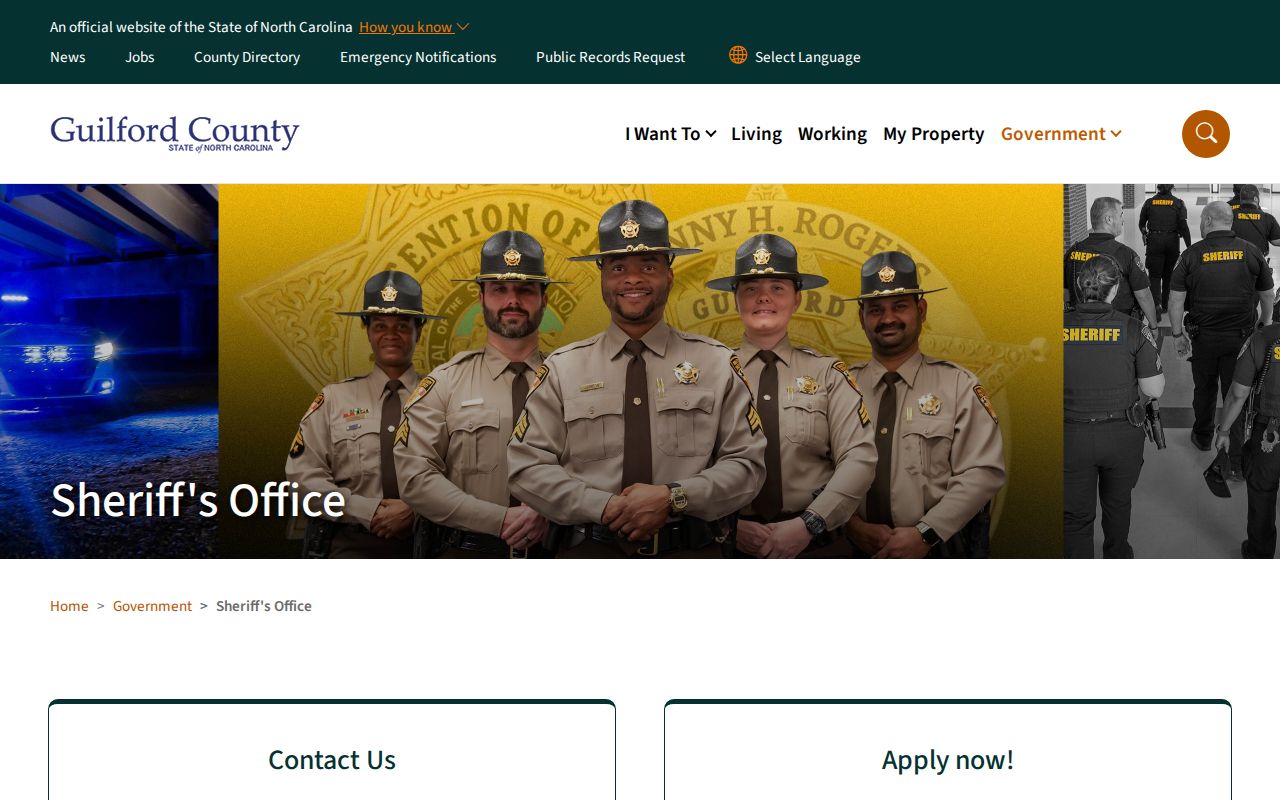
This view shows the county's arrest, detention, warrant, and records channels. No gallery of people appears here.
When Guilford Bookings Appear
A fresh arrest never hits the web the moment an officer acts. Intake takes time. It can include identity checks, fingerprints, a booking photograph, charge entry, medical screening, and a facility assignment. One detention guide estimates a wait of two to four hours before a new Guilford County booking appears. A released row may vanish within a day. Those are estimates. The sheriff makes no promise about them. Missing someone arrested last night? Try alternate spellings, and search the roster along with the recent feed. For urgent custody questions, call Greensboro Detention Center at 336-641-2700 or High Point Detention Center at 336-641-7900. People move between the two sites. The VINELink Check adds release or transfer alerts for a matched person, though it publishes no mugshot. It cannot replace a call when time matters.
How Guilford Counts Jail Activity
Scale shapes how you should read Guilford County jail numbers. The official detention page reports about 19,000 bookings a year. Average daily population runs above 800. A booking is an intake event. It is not a count of people arrested, charges filed, or inmates held on one day. One person can carry several charges. One person can also pass through intake more than once. High Point Police shows the gap clearly. Its 2021 annual report logged 7,007 arrests, 10,979 charges, and 4,638 people. Three different measures sit in that one line. None of them describes current Guilford County recent arrests. The report's value is definitional, since arrests, charges, and people each answer a different question. Roster counts deserve the same care. A given day's jail population mixes people arrested on different dates, transfers between Guilford facilities, sentenced inmates, some federal holds, and people awaiting movement elsewhere. That total is not a same-day arrest count. The Recent Arrests Catalog, likewise, is a publication view rather than a countywide crime rate. Record the date, custody state, and source label with any figure you keep.
Two Guilford County Detention Centers
GCSO runs two detention centers. Greensboro Jail Central, also called Greensboro Detention Center, sits at 201 S Edgeworth Street. Its rated capacity is 1,032. The High Point Detention Center holds 274 beds at 507 E Green Drive. Inmates can be assigned or transferred between them. So facility details stay time-sensitive even when the name and booking number never change. Greensboro Jail Central opened in 2012. High Point's center dates to January 1990. Those two buildings explain why Guilford County has separate detention contacts. There is no single city-based jail list. A Greensboro Police booking is not guaranteed to stay in Greensboro. High Point arrests usually route to the High Point center. A transfer can still change the right phone number and visiting location. Call the facility shown on the live record. If none is listed, try both county numbers. Have the person's full legal name and booking number ready. Detention staff handle housing questions. They cannot give you the final court outcome. For that, turn to the Guilford clerk or the NC Courts Portal. The two systems serve different purposes.
Search Guilford County Jail Arrests
The county's live custody list is the GCSO Inmate Catalog. It can hold people booked hours ago or people moved between county facilities. Some are serving local sentences. Others sit in custody for another agency. Some wait on a transfer. Greensboro Jail Central and High Point Detention Center run under one set of policies. Where a person was arrested says little about where they are held.
| Search or result field | How to read it |
|---|---|
| Full legal name | Use the agency spelling; a matching name alone is not identity proof. |
| Inmate or booking number | The strongest jail identifier, but not a court or DOC number. |
| Booking date | Intake time, not necessarily incident or arrest time. |
| Charges and holds | Charges and restraints shown at that point. |
| Bond | A current release condition, not a sentence. |
| Facility or housing | Current assignment, which may change after transfer. |
| Photograph | Possible for some records, not guaranteed. |
Begin with a full name. Then slow down. Match the booking number, age, booking date, and arresting agency. Only then trust any result as the right person. Open the record itself for custody status and bond detail. If the roster shows no match, call both detention centers and check the court case. A released person drops off the live list while charges may still be pending.
Guilford County Custody Apps
The sheriff's office lists no jail app of its own. The county does offer the myGuilfordCounty app, which handles payments, county services, records, and reminders. Its listing says nothing about inmate search, booking alerts, or photos. So treat it as a county-services tool. For jail status, rely on the official inmate catalog, detention staff, or NC SAVAN notifications. Confusing a general app with a live custody source leads people to stale answers. That mistake is easy to make.
Where Guilford Booking Records Appear
Each channel shows one slice of a Guilford County arrest. Start with official sources. City newsrooms cover selected incidents rather than every booking, and commercial indexes may hold older copies that miss a release or later change.
| Channel | Photo? | Status and use |
|---|---|---|
| GCSO Recent Arrests | Possible | Official new-booking route; exact window unverified |
| GCSO Inmate Catalog | Possible | Official current-custody route |
| NC Courts Portal | No booking gallery | Official case, hearing, and disposition route |
| NCDAC search | Not guaranteed | Official state prison, probation, and parole data |
| City police newsrooms | Sometimes | Official but selective incident releases |
| RecentlyBooked and Mugshots.com | Often | Unofficial copies; verify dates, custody, and outcome |
Plenty of third-party sites gather Guilford County arrest data, and two come up often: RecentlyBooked and Mugshots.com. Neither one runs the jail. Their booking entries can lag behind reality, repeat themselves, or linger after a case closes, so treat them as leads rather than proof of anything. Before acting on a name you find there, check the official Guilford County jail roster and the court file, which sit on the third-party county index of anyone's first search list but never at the top of a careful one.
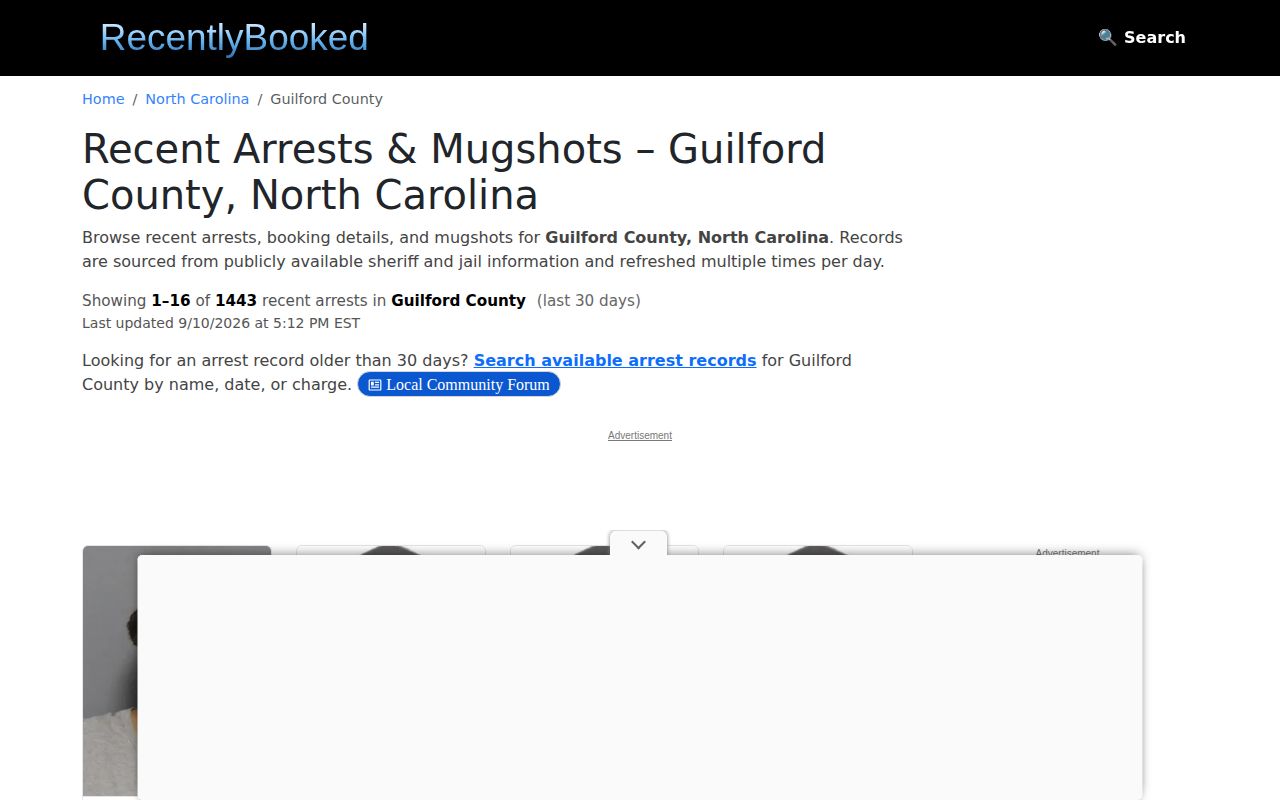
These indexes are source context. They are not a gallery, and they prove nothing about current Guilford County jail status.
Guilford County Arrests by City
City police records supply incident detail. The jail record comes from whoever received the person. That gap matters most near the county line, where a city arrest and a county booking can land in different systems.
- Greensboro Recent Arrests: Greensboro Police has a newsroom and crime map; people are usually routed into one of the two GCSO detention centers.
- High Point Recent Arrests: High Point Police links daily arrests and citations plus the county jail search, with many local bookings routed to High Point Detention Center.
- Burlington Recent Arrests: Burlington crosses the Alamance and Guilford line, and Burlington Police releases often identify Alamance County Detention Center.
Burlington arrests need extra care. Pin down the arresting agency and the booking destination before picking a county roster. A Guilford street address alone never proves a Guilford County booking.
Reading a Guilford Booking Record
A booking entry is one object in a longer process. An agency makes the arrest first. Jail staff then create the intake and custody entry. North Carolina courts carry the criminal case from there. Similar names across those systems do not make their numbers or statuses interchangeable.
| Record field | What it shows |
|---|---|
| Legal name | The recorded spelling, which still needs identity checks. |
| Booking number | The jail-side reference for that intake. |
| Booking date and time | When processing occurred, not always when the incident happened. |
| Arresting agency | GCSO, city police, Highway Patrol, or another authority. |
| Charges as booked | Initial charges that may later change. |
| Bond or hold | The release condition or restraint then in force. |
| Facility | The housing assignment at retrieval time. |
| Court date | A scheduled event that can move. |
| Disposition | The later court outcome, found through court sources. |
What does “booking” mean? Booking is the jail intake process that follows an arrest. It is not a complete arrest history.
Guilford County Mugshots After Arrest
Guilford's booking photos live inside a layered system. GCSO's internal PictureLink platform captures photographs as part of the jail workflow, and High Point's “Who's in Jail” description lists a photograph as a possible search field. None of that promises a public picture. A live roster result may show a booking photo, or it may not, and photos can vanish after release.
North Carolina law keeps some images off the web entirely. G.S. 132-1.4 splits public arrest facts from confidential criminal-investigative material, so protected, juvenile, sealed, or withheld images may simply be absent. The public roster, the internal database, and a records-request response can all differ from one another. The GCSO jail-management procurement record documents the internal photo system.
That procurement record proves photo capture is long-standing. It promises no public display, and it sets no fixed retention term for any Guilford County booking photograph.
Request Guilford County Booking Records
Once a record rolls off the live roster, file through the Guilford County NextRequest portal. Ask for the booking record itself. Then request any releasable booking photograph separately. A narrow request moves faster than a demand for every image.
- Give the full name, approximate booking date, and arresting agency.
- Add the booking or inmate number and facility if known.
- Identify the exact record and photograph sought.
- Ask for electronic delivery, a fee estimate, and the legal basis for any redaction or denial.
- Use the arresting city's records route for a city-created police report.
Timing and fees come from the county's own guidance. Routine requests generally arrive within about 30 business days. Confidential or multiagency review can stretch that. Fees run 15 cents per paper page, 15 cents per microfiche copy, and $2 per CD. No fee specific to booking photos is listed, so request electronic delivery and ask for an estimate. The Guilford NextRequest FAQ spells out the public-record process and fee rules.
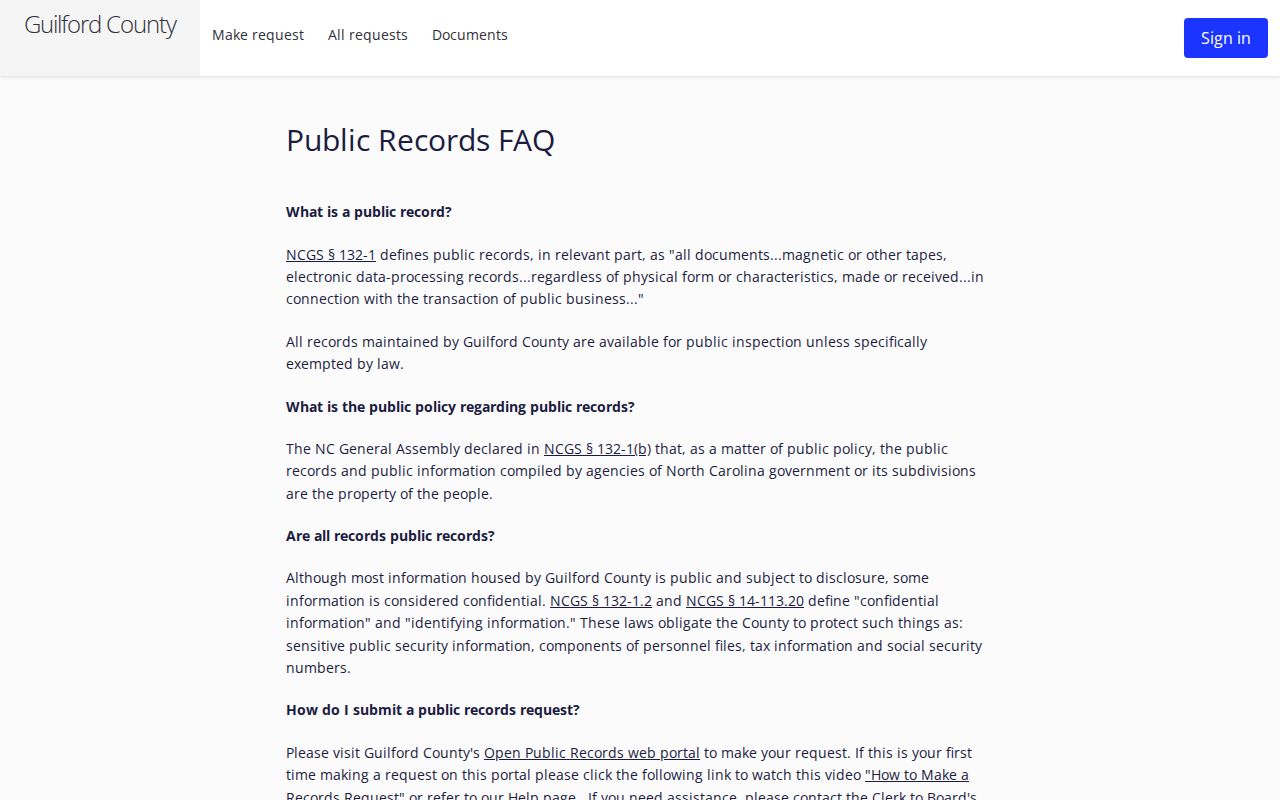
This official fallback works best once a released person's booking no longer shows on the live roster.
North Carolina Booking Photo Law
Chapter 132 gives "public records" a wide meaning. Photos and electronic data count when made or received in public business. Then G.S. 132-1.4 draws the real line. Arrest facts stay public. Criminal-investigative and intelligence records stay closed unless something opens them. A court may also let an agency withhold material. That material could threaten an investigation, a prosecution, or a fair trial.
North Carolina has no statewide pay-to-remove mugshot law. The lawful fix starts with the record custodian or a court expunction. NC Courts explains expunction as destroying or sealing eligible state arrest, charge, or conviction records. Eligibility, waiting periods, fees, and forms all turn on the case and the statute involved.
For an unofficial copy, stick to a publisher's stated no-fee process. RecentlyBooked posts a free policy covering dismissals, expunctions, and sealing. It also covers errors, wrong-person entries, juvenile matters, and duplicates. Mugshots.com takes no payment for removal and publishes a maintenance process. Other indexes offer no dependable free route. Never pay a service on the assumption it can change the sheriff or court record. If a source corrects or removes a page, a search engine can then act. Its stale-result process can clear an outdated cache.
Important: Official correction, court expunction, publisher removal, and search-result cleanup are four separate actions. One never guarantees the rest.
Why Some Guilford Photos Stay Withheld
A missing booking photo isn't always a glitch. North Carolina law allows several limits. Criminal-investigative information can stay confidential. An agency may ask a court to shield material when disclosure would jeopardize a prosecution, a fair trial, or an active investigation. Juvenile-photo rules under G.S. 15A-502 add another barrier. Sealed or expunged matters get different treatment too.
NC SAVAN has gaps. It skips juvenile and mental-health facilities, many local police precincts, people released by a magistrate before jail entry, and federal custody. A VINE no-match proves little. It just means the person wasn't matched in that participating channel. It does not rule out an arrest.
So route the question instead. Spell the name exactly and compare identifiers before switching sources. For a fresh intake, allow processing time, then call the detention center. City police reports go through the city records office. If a photo is withheld, ask the custodian to cite the basis. Final outcomes belong to the court record, and none of these routes makes an unofficial photo copy a substitute for the real thing.
How Long Guilford Records Last
Guilford County posts no single retention term. State archives schedules treat detention incident reports differently from operational records. Operational records include rosters, commitment and release reports, cell locations, and accountability logs. Some incident records kept outside a case file may be destroyed after three years. Other operational records can go once their reference value ends under agency policy. Case files follow their own rules. An online absence proves nothing about destruction. Ask GCSO whether the dated record survives and which retention authority applies. The North Carolina Archives local-government page is the official schedule gateway. It is not a searchable mugshot collection. Court files and NCDAC files sit with separate custodians.
Guilford Arrest Warrants and Wanted Notices
Since the P2C migration, the county hosts no working public criminal-warrant search or current most-wanted list. Old most-wanted URLs are dead photo lists now. The official GCSO services page sends warrant calls to Greensboro at 336-641-2727 and High Point at 336-641-7907. Magistrates handle criminal process after hours and weekends. The county's Civil Process Search is official. It is not a criminal warrant database. Court records may show a related public case or returned process, but neither confirms real-time service status. Anyone working through a possible warrant should call an attorney, the clerk, a magistrate, or the right Warrant Office. The civil-process interface makes that distinction plain.
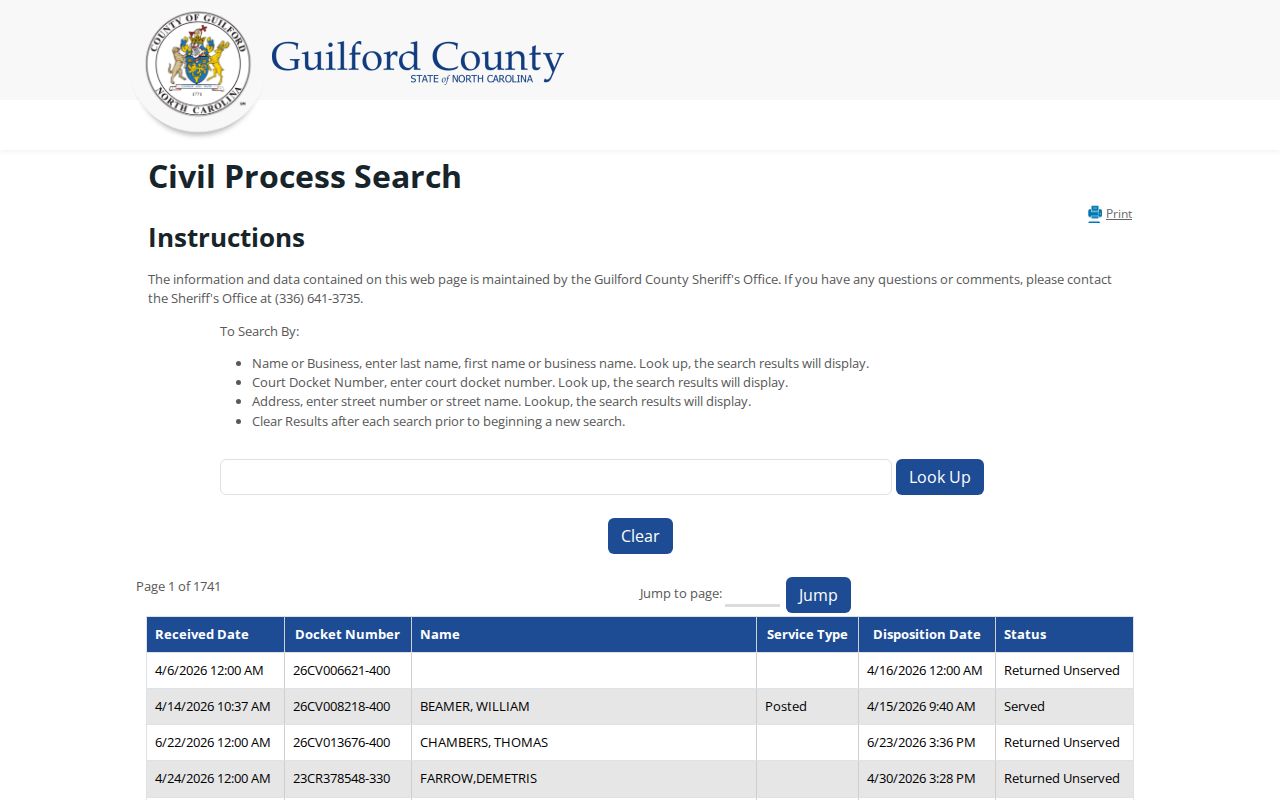
Use it for civil process only. It never proves a Guilford County criminal arrest warrant exists or was served. Never approach or detain a wanted person yourself; call 911 for immediate danger or use an official tip channel.
After a Guilford County Arrest
Custody and court status split right after booking. The jail roster may list a bond. That figure is only a release condition at that moment. An arraignment is the early court appearance where charges and rights are addressed. The disposition is the outcome, such as dismissal, plea, acquittal, or judgment. Only the court side shows how a case ends.
Guilford runs courthouse centers in Greensboro and High Point. The Guilford court directory lists Greensboro at 336-412-7300 and High Point at 336-822-6700. It also shows separate magistrate contacts. Check the NC Courts Portal or the clerk. Hearing dates can shift, and a booking charge may be reduced or dismissed.
- Bond
- A condition tied to release.
- Arraignment
- An early court stage, not the final result.
- Disposition
- The court's resolution of a charge.
- Expunction
- A court process that seals or destroys eligible records under law.
Guilford Records Beyond County Custody
State custody has its own tool. The North Carolina Department of Adult Correction search reaches state prisoners, probationers, parolees, and older state records in one place. Filters include name, a seven-digit offender number, active or inactive status, birth information, and demographic fields. Photos are not always shown. A fresh Guilford County arrest booked into a county jail will not appear there, since that booking stays with county systems.
Federal questions need different locators. The Bureau of Prisons locator is the official federal prison search, and it posts no booking photos. ICE runs a separate detention locator. Neither replaces GCSO when the person sits at Greensboro or High Point.
Custody stage decides the system. A county arrestee can leave the roster after release, move into NCDAC after sentencing, or transfer into federal custody, so match the search tool to where the person actually is.
Track Guilford Custody by Stage
The right source shifts as a case moves. A brand-new Guilford County arrest points to the Recent Arrests Catalog first, though processing delay can hold a name back. Once the county shows the person in custody, the Inmate Catalog does the job better. It carries facility, holds, and current status. A correct VINE match then adds notice of a release or transfer.
Release never erases the booking. Someone can drop off the current roster while the court case runs on. NextRequest works for a dated booking record that already exists. The arresting police department keeps its own report. The NC Courts Portal or clerk handles hearings and the final outcome.
A state sentence moves the person to NCDAC. Federal prison and immigration custody need federal locators. Old papers may hold a dated mention. They cannot prove present custody. Keep the retrieval date, the exact source, the custody stage, and whether a photo was actually visible. That habit keeps an old Guilford County arrest page from posing as a current jail record.
Verify a Guilford County Arrest
Start with the question, not just a name. A booking today points to the Recent Arrests Catalog. Suspected ongoing confinement points to the Inmate Catalog. Then compare legal name, booking date, identifier, arresting agency, and facility. Similar names are common in Guilford County. A name-only match is never a confirmed identity.
When the portals fall short, use the right fallback. Call either Guilford detention center for an urgent custody check. NC SAVAN or VINELink gives status and alerts for participating custody. Request the booking entry from Guilford County once it rolls off the roster. Greensboro, High Point, or Burlington police hold reports their own officers wrote. Each custodian controls its own records.
Then check the court side. Booking charges can change later. A prosecutor may amend them. A bond can move too. Save the retrieval date whenever quoting a roster or court entry, since a correct statement one day can turn stale after release, transfer, correction, or a new court order.
Missing Guilford Recent Arrest Records
A missing result usually has a plain cause. Intake may still be running. The arresting agency may have routed the person to another county. A released entry leaves the current roster. The portal can reject a request or go down briefly. Spelling may differ, or the record may be protected.
None of that settles whether an arrest happened. Burlington needs special care. The city straddles the line, with most of it in Alamance County. Its police releases often name Alamance County Detention Center. Confirm the agency, the incident place, and the receiving jail before searching only Guilford. Greensboro and High Point bookings generally stay within the Guilford detention and court systems, though transfers still happen.
Guilford County P2C Migration
Old P2C URLs still surface in search results. They cover daily bulletins, arrests, inmates, and most-wanted lists. Current GCSO pages now point to the newer Police to Citizen host. A legacy address reflects an older system, not a live archive or current wanted list. Treat it as history. Use the current Sheriff hub for active links.
The current portal sometimes rejects a request outright. That is reason enough to keep several tools in the workflow. The roster, detention phone lines, court search, and records-request route all still matter. One web screen is never the whole picture.
Booked Versus Released in Guilford
“Booked” means jail intake is complete. “In custody” means a live source shows confinement at a named facility right now. “Released” says custody ended or changed, and nothing about how the case turned out. State custody means NCDAC, not the county roster. These terms should never be swapped.
| Status | Best Guilford source | What may remain |
|---|---|---|
| Newly booked | Recent Arrests Catalog | Booking fields and possible photo |
| In county custody | Inmate Catalog or detention staff | Facility, bond, holds, and custody status |
| Released | VINE, court, or records request | Case and historical booking record |
| State prison or supervision | NCDAC offender search | State offender and location data |
| Federal prison | BOP locator | Federal location data, no booking photo |
Why does an unofficial mugshot page mislead so easily? It freezes a moment. The first booking photo can linger there long after a release, a dismissal, or an expunction. Any of those erases it from the official record. Corrections get skipped too. So treat the dated official entry and the current court outcome as two separate checks. A copied image tells you nothing about who is in custody now.
Older cases need one more distinction. Guilford's own procurement paperwork for its jail-management system says it stores booking, release, and vital data. It also notes that PictureLink has captured booking photographs for roughly twenty years. That describes an internal workflow. It does not promise that every old image is online, still retained, or releasable. North Carolina retention schedules can also suspend destruction when an audit or a lawsuit is pending or reasonably expected.
Chasing an older Guilford County arrest? Name the booking date and facility in a focused NextRequest submission. Ask two things: does the record exist, and which retention schedule controls it. If the county says it was destroyed, request the retention authority behind that answer. Historic context can come from a local library, archived newspapers, or a North Carolina Archives collection. None of those is a present-custody list. Tie any old news report to its publication date. An archive cannot override an expunction order, a corrected official entry, or a current court disposition. The same logic reaches NCDAC. Its public-records route governs state corrections material, while Guilford County stays custodian of its own jail booking records.
Label everything you save. Note whether each result came from the recent feed, the live roster, the court system, or an archive. Add the search date and the displayed status. Missing photo? Say it was not visible, not that none exists. A bond amount is a dated condition, never a fixed outcome. Those habits keep Guilford County recent arrest research honest. People move between facilities, and their cases move through the courts.
Guilford County Sheriff’s Office Location and Directions
Public Record Search
Sponsored Results